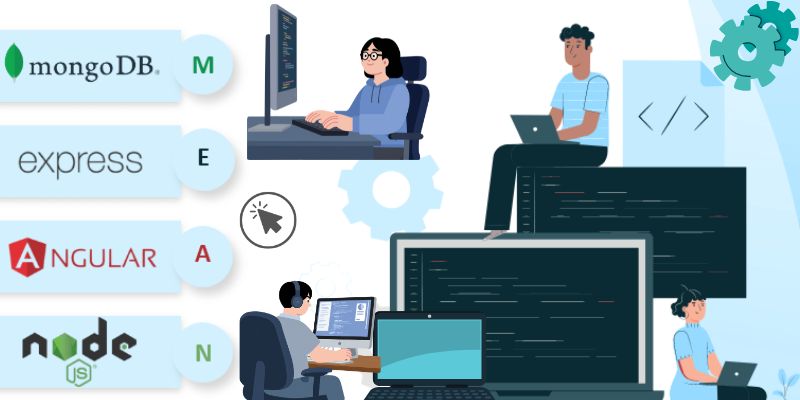
As companies continue to move toward contemporary digital platforms and scalable web applications, the need for full-stack web developers is expanding quickly. The MEAN stack is now one of the most widely used development technologies for businesses creating dynamic, high-performing applications. MEAN, which stands for MongoDB, Express.js, Angular, and Node.js, is a potent set of technologies used to build whole web applications with JavaScript.
Because MEAN Stack Developers can effectively manage both front-end and back-end development, cutting down on development time and increasing productivity, businesses favor them. Professionals capable of managing databases, developing secure server-side applications, and developing responsive user interfaces are in high demand across startups and large corporations. FITA Academy empowers learners to develop industry-ready MEAN Stack development skills, technical interview preparation, and professional coding practices aligned with real-world software development careers.
Understanding the Role of a MEAN Stack Developer
Using the four main technologies in the MEAN stack, a MEAN Stack Developer is in charge of creating entire web applications. These experts are extremely valuable in software development teams because they work on both the client and server sides of applications. Their daily tasks include using Angular to create user-friendly interfaces, Express.js and Node.js to create APIs, and MongoDB databases to manage application data. MEAN Stack Developers are also involved in testing, debugging, deployment, and performance optimization in many organizations.
Because JavaScript is used throughout the entire stack, developers can keep the application consistent, which speeds up development and fosters teamwork. Professionals who can create scalable and secure applications while solving real-world business problems are sought after by employers. Companies expect MEAN Stack Developers to have knowledge of version control systems, cloud deployment, and teamwork in addition to coding abilities.
Essential Skills Required for MEAN Stack Development
Gaining technical proficiency is crucial for becoming a successful MEAN Stack Developer. Since every technology in the MEAN stack depends on JavaScript, the first step is to fully understand the language. Developers should be familiar with ideas like object-oriented programming, promises, callbacks, asynchronous programming, and ES6 features. Creating aesthetically pleasing user interfaces also requires an understanding of HTML, CSS, and responsive web design. Angular enables programmers to create robust front-end apps with dynamic functionality and reusable parts.
Node.js and Express.js enable developers to create scalable and quick web servers and APIs on the back end. Because it stores application data in an adaptable NoSQL database format, MongoDB is equally significant. For version control and project collaboration, developers should learn Git and GitHub in addition to technical proficiency. MEAN Stack Training in Chennai offering practical, industry-relevant guidance in full-stack web development, API integration, front-end and back-end technologies, and professional software career preparation.
Step-by-Step Roadmap to Learn the MEAN Stack
Developers who adhere to an organized roadmap find it easier to learn the MEAN stack. Learners can transition to Express.js for creating APIs and efficiently managing server requests once they have a solid understanding of Node.js concepts. MongoDB should be studied next because it facilitates the effective management and retrieval of application data by developers.
During project development, it is very helpful to understand CRUD operations, database schemas, and query optimization. Developers should concentrate on Angular for front-end application development after finishing back-end technologies. Concepts like components, services, routing, and dependency injection are introduced by Angular.
Building Real-World Projects and Portfolio
Developing useful projects that highlight technical abilities is one of the best ways to get a job as a MEAN Stack Developer. Candidates who can show practical experience rather than just theoretical knowledge are frequently given preference by recruiters. Simple projects like task managers, blog apps, weather apps, or authentication systems are good places for beginners to start. Developers can advance to more complex applications, such as online learning platforms, chat apps, or e-commerce platforms, as their skills advance. Developers can learn about application architecture, API integration, and other topics through practical projects. B School in Chennai can significantly boost your career readiness and employability by enhancing your MEAN Stack development skills, project management abilities, and real-world web application expertise.
database administration and deployment procedures. Additionally, portfolios become more professional and accessible to recruiters when projects are hosted on GitHub and cloud platforms. Project descriptions, the technologies used, screenshots, and links to live demos should all be included in a strong portfolio. Additionally, developers ought to describe the difficulties they encountered and how they overcame them. Project-based practical experience improves candidates’ performance in technical interviews and coding tests.
Mastering Front-End and Back-End Integration
A proficient MEAN Stack developer must be able to seamlessly integrate front-end apps with back-end services. For seamless user experiences, front-end and back-end integration is essential. Through APIs, Angular applications exchange data between the database and the user interface with Node.js and Express.js servers. For secure communication, developers should be familiar with RESTful APIs, HTTP techniques, JSON data handling, and authentication methods.
When applications are integrated properly, users can interact with them without any problems or delays. Additionally, developers should become proficient in handling form validations, managing application states, and efficiently processing asynchronous requests. Debugging and error handling are equally crucial during integration because they enable developers to find problems fast. Productivity can be greatly increased by using tools like Postman for testing APIs and browser developer tools for debugging.
Preparing for MEAN Stack Developer Interviews
In order to land a job as a MEAN Stack Developer, interview preparation is crucial. The majority of organizations use technical rounds, coding tests, and project discussions to evaluate applicants. This is how to deploy your first MEAN stack application. Interviewers frequently place a strong emphasis on JavaScript fundamentals, so developers should thoroughly review these concepts. During interviews, questions about array methods, promises, event loops, closures, and asynchronous programming are frequently asked.
Angular concepts like components, directives, services, routing, and data binding should also be prepared by candidates. Interviewers may inquire about MongoDB queries, Node.js modules, Express.js middleware, and API development. Solving coding challenges on a regular basis can boost confidence and problem-solving skills because practical coding skills are equally important. Additionally, candidates can enhance their communication skills through group discussions and mock interviews.
Best Practices for Career Growth in MEAN Stack Development
Getting hired as a MEAN Stack Developer is just the start of a fruitful career in software development. Developers should learn new technologies, keep up with industry trends, and continuously improve their coding techniques. Writing clear, reusable, and maintainable code facilitates developers’ productivity in work settings. Gaining knowledge of cloud services, Docker, testing frameworks, and deployment techniques can improve career prospects. To obtain real-world experience and networking opportunities, developers should also contribute to open-source projects and take part in coding communities.
Applications can be made much better by learning debugging techniques and performance optimization strategies. Because software development frequently involves teamwork and project deadlines, time management and collaboration skills are equally important. To draw in recruiters, developers should update their LinkedIn profiles, resumes, and portfolios on a regular basis. Professionals can also learn from industry experts by participating in workshops, hackathons, and technical events.
Final Report
For those interested in full-stack web development, MEAN Stack Development provides fantastic career opportunities. Businesses actively look for developers who can create scalable and user-friendly applications while managing both front-end and back-end technologies. Aspiring developers can establish solid technical foundations and increase their employability in the IT sector by becoming proficient in JavaScript, Angular, Node.js, Express.js, and MongoDB.
Job prospects can be significantly enhanced by creating useful projects, adhering to a structured learning roadmap, and regularly preparing for interviews. Long-term professional success is also influenced by teamwork, communication abilities, and ongoing education in addition to technical proficiency. The software industry is always changing, and developers who adjust to new technologies and industry demands frequently advance in their careers more quickly.