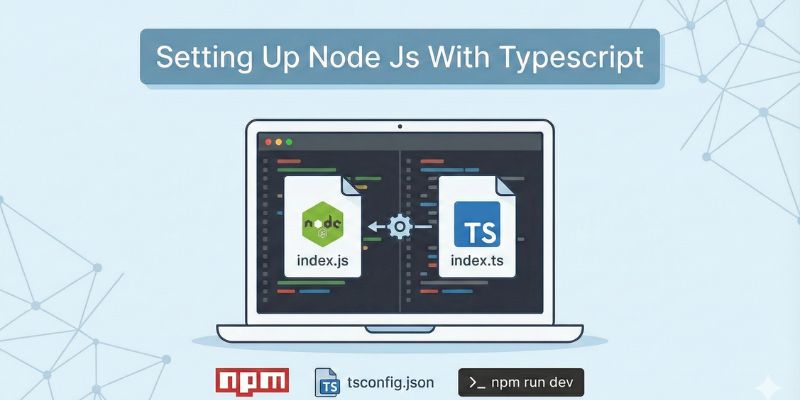
The field of modern web development is still developing quickly, and developers are always looking for tools to enhance the quality, scalability, and maintainability of their code. Is one technology that has become very popular. Which TypeScript is a superset of JavaScript that makes it simpler to create reliable applications by adding static typing, better error detection, and improved tooling. Apotent tool for building scalable backend services, APIs, and enterprise-grade apps when paired with Node.js. FITA Academy supports learners in developing Node.js programming, server-side development, API integration, database management, asynchronous programming, and backend application skills.
Understanding the Relationship Between Node.js and TypeScript
In contemporary application development, Node.js and TypeScript are a wonderful match. Node.js is perfect for server-side applications because it provides a runtime environment that enables developers to run JavaScript code outside of the browser. In contrast, TypeScript enhances JavaScript with sophisticated language capabilities and optional static typing. Code must be compiled into JavaScript before it can be executed since Node.js cannot run TypeScript files directly. While preserving compatibility with the JavaScript environment, this compilation approach enables developers to take use of type checking and contemporary development capabilities. For instance, may be used by a developer creating a REST API to specify data structures and identify any mistakes. The
Prerequisites and System Requirements
Developers should make sure their systems satisfy the criteria before setting TypeScript with Node.js. Both Node.js and TypeScript may be executed on a contemporary operating system like Windows, macOS, or Linux. When working on huge projects, having enough memory and storage capacity is very important for maintaining smooth development performance. Node JS Training in Chennai offering practical, industry-focused guidance in server-side development, API creation. A code editor like Visual Studio Code, which offers great support for both Node.js and TypeScript development, should also be installed by developers. Because many setup activities involve terminal commands, it is advantageous to be familiar with command-line tools.
Installing Node.js, npm, and TypeScript
Installing Node.js, which comes with npm, the Node Package Manager, is the first step in configuring TypeScript. Get the most recent stable version that works with your operating system by going to the official Node.js website. After installation, check the installed versions of Node.js and npm in a terminal window to confirm the configuration. Install TypeScript globally using npm after Node.js is operating properly. Developers may use the TypeScript compiler from any project directory with a global installation. Check the compiler version after installation to make sure everything is operating as it should.
Configuring a TypeScript Project Using tsconfig.json
The next step is to create a TypeScript project setup after installing the necessary tools. tsconfig.json, which regulates compiler behavior and project parameters, is the most crucial file in a TypeScript project. The TypeScript compiler may be used by developers to automatically create this file. Target JavaScript version, module system, source folders, output destinations, and stringent type-checking guidelines are all specified in the configuration file. Node.js Training Institute in Chennai focuses on hands-on, industry-oriented learning. Strict mode, for instance, makes it easier to identify any problems during development, resulting in more dependable programs.
Writing and Executing Your First TypeScript Program
Developers can start creating TypeScript code when the project setting is finished. Variable declarations, functions, and type annotations are usually the first steps of a basic TypeScript application. The type system of TypeScript. Makes it easier to find mistakes before code is used in production settings, which minimizes the need for subsequent debugging. The TypeScript compiler is used by developers to transform code from source files into executable JavaScript. Node.js may immediately run the output files produced by the compiler. The effective completion of the setup procedure is confirmed by running the built program.
Using ts-node, nodemon, and the TypeScript Compiler Efficiently
Tools that streamline processes and boost output are frequently used in modern TypeScript development. One well-liked tool is ts-node, which enables programmers to run TypeScript files immediately without first having to compile them. Development and testing are greatly accelerated by this capability. Nodemon, which automatically restarts programs whenever source files change, is another useful tool. When nodemon and ts-node are combined, a very productive development environment with instantaneous updates is created. Because it produces JavaScript output that is optimized for deployment, the TypeScript compiler is still necessary for production builds.
Common Setup Issues, Troubleshooting, and Best Practices
Developers may run into setup problems while configuring TypeScript with Node.js, even with adequate preparation. Incorrect compiler settings, missing dependencies, version incompatibilities, and file path errors are common issues. Carefully examining error messages frequently identifies the root source of the problem. These are the 5 amazing reasons why node.js is a single threaded language. Clever audio improvement tools can balance sound levels, eliminate background noise, and boost speech clarity. Many frequent issues may be avoided by keeping project configurations consistent and packages up to date. Additionally, because modifications may be erased during subsequent compilations, developers should refrain from directly editing created JavaScript files. By monitoring configuration changes and facilitating simple recovery in the event of errors, version control systems like Git offer further security.
Improving Productivity and Organizing TypeScript Projects
Productivity and maintainability are greatly increased by a well-structured project. Related files, such as controllers, services, models, and utilities, should be grouped by developers into logical folders. Code is easier to explore and comprehend when naming conventions are consistent. Maintaining consistency across big apps is made easier by utilizing TypeScript capabilities like interfaces and type definitions. By imposing coding standards on development teams, automated formatting and linting tools improve code quality even further. By dividing complicated programs into digestible parts, developers may increase scalability and lower technical debt by using modular design concepts.
Conclusion
That want to create scalable, maintainable, and dependable apps will find it useful to know how to set up Node.js to run TypeScript. May build a solid basis for contemporary application development by comprehending how Node.js and TypeScript interact, setting up the right environment, installing necessary tools, and correctly configuring projects. Write cleaner code, collaborate more successfully, and create apps that are simpler to maintain as projects get more complicated by devoting effort to learning this setup process.