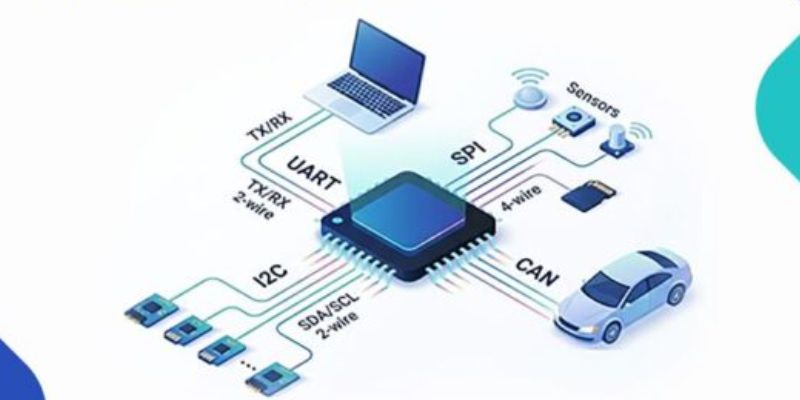
Fast, dependable, and effective communication between several electronic devices is essential to modern embedded systems. For optimal performance, reliable data interchange is crucial, whether in smart IoT devices, medical equipment, autos, or industrial automation systems. Developers want communication protocols that can manage real-time data transfer while preserving scalability and dependability as embedded systems get more sophisticated. The Controller Area Network (CAN) protocol is essential in this situation. CAN, which was first created for automotive purposes, has grown to become one of the most used embedded system communication protocols. FITA Academy supports learners in developing embedded programming skills, microcontroller interfacing knowledge, hardware-software integration expertise, and real-time system development capabilities.
It eliminates the need for a central computer by allowing several devices to interact across a common network. It is a popular option in many different sectors due to its strong design, error detection features, and economical implementation. Engineers, developers, and students may better understand why the may protocol is still essential to contemporary embedded system design by comprehending its advantages. This article describes how the CAN protocol improves communication efficiency in embedded systems and examines five of its main benefits.
What Is CAN Protocol?
A serial communication protocol called Controller Area Network (CAN) was created to make it easier for embedded devices and electronic control units (ECUs) to communicate. CAN was first created by Bosch in the 1980s for automotive systems where reliable information interchange between several controllers was required. CAN enables all nodes to share a single communication bus, in contrast to conventional communication techniques that call for special connection between devices. This method drastically lowers system costs and wiring complexity. The message-based architecture of the CAN protocol broadcasts messages to all connected devices, and each node determines if the information is pertinent.
Additionally, the protocol ranks communications according to their significance, guaranteeing that important information is given prompt attention. Beyond automotive applications, CAN is now widely employed in industrial machinery, robotics, aerospace systems, and medical equipment. It is one of the most trusted protocols in embedded system development because of its capacity to deliver reliable communication in difficult conditions.
How CAN Protocol Enables Efficient Device Communication
The CAN protocol’s effective method of device communication is one of the reasons it is still widely used. Instead of using distinct communication channels, all linked devices in a CAN network interact over a single bus. A device posts a message on the bus when it needs to send data. The message is received by every node in the network, but it is only processed by devices that are configured to identify that particular message ID. This approach increases network efficiency and reduces pointless communication. Additionally, when numerous devices try to transmit at the same time, CAN’s built-in arbitration algorithms prevent data conflicts.
Without interfering with lower-priority transmissions, higher-priority messages automatically obtain access to the network. This functionality is particularly useful in systems that require instantaneous delivery of crucial data. For instance, information about a car’s braking system must be prioritized above less crucial data, such infotainment updates. Embedded System Courses in Chennai offer practical, industry-focused guidance in embedded programming, microcontroller interfacing, hardware-software integration, and real-time system development.
Benefit #1: High Reliability and Robust Error Detection
One of the main benefits of the CAN protocol is its reliability. Embedded systems frequently function in settings where communication breakdowns might have detrimental effects. CAN uses sophisticated fault management and error detection techniques to overcome this difficulty. The protocol automatically detects communication faults by continually monitoring network traffic. To guarantee data integrity, it employs methods including bit monitoring, frame verification, acknowledgment checks, and cyclic redundancy checks (CRC).
In the event of a transmission error, the protocol promptly identifies the problem and retransmits the impacted message. To stop malfunctioning nodes from interfering with communication, they can also be disconnected from the network. For instance, sensors that regulate engine performance and safety features in a vehicle system must always communicate precisely. Even in challenging circumstances, CAN’s error-handling capabilities contribute to system stability. The CAN protocol is perfect for mission-critical applications where precise and constant data transfer is crucial because of its high degree of dependability.
Benefit #2: Reduced Wiring Complexity and Lower Costs
Dedicated wiring connections between devices are frequently necessary for traditional communication systems, which leads to complicated network designs and higher installation costs. By enabling several devices to connect over a single common communication bus, the CAN protocol streamlines this procedure. Developers may connect every node to a single network cable rather than running individual cables for every connection. This drastically lowers the quantity of wiring needed in a system. B School in Chennai can significantly boost your career readiness and employability by enhancing your embedded programming, microcontroller interfacing, hardware-software integration, and real-time system development skills.
Fewer wires in automotive applications result in lighter vehicles, cheaper production costs, and simpler maintenance. Streamlined wiring also helps industrial automation systems by making installation and troubleshooting easier. Because there are fewer physical connections that might fail, reduced wiring complexity increases overall system dependability. Furthermore, expanding or changing current systems is made simpler by the streamlined design.
Benefit #3: Real-Time Communication for Critical Applications
For many embedded systems to operate properly, real-time communication is necessary. Critical information transmission delays may jeopardize operational effectiveness, performance, or safety. The priority-based message arbitration system of the CAN protocol satisfies this need. Every communication on the network is assigned a unique identification that establishes its priority level. Higher-priority messages automatically get access to the bus first when numerous devices try to communicate at the same time. This guarantees the prompt transmission of vital information.
For instance, in order to guarantee safe operation, data pertaining to brakes, steering, and engine control must be transmitted instantly in a modern car. In a similar vein, real-time communication is necessary for industrial automation systems to synchronize production processes and machines. The CAN protocol is ideal for time-sensitive applications because it ensures consistent response times. Even when network traffic grows dramatically, embedded systems may remain stable and responsive because to its capacity to prioritize critical communications.
Benefit #4: Scalability and Flexibility in System Design
Developers frequently need to add additional devices, sensors, or controllers as embedded systems advance without completely rewriting the communication architecture. These are the main components of embedded systems. Because of the CAN protocol’s remarkable scalability and flexibility, expanding the system is not too difficult. New nodes may be added to the network with little modification to the hardware already in place because all devices communicate via a common bus. Organizations may modify systems to meet evolving needs thanks to this flexibility without incurring high redevelopment expenses.
For instance, manufacturers don’t need to rebuild the entire communication network in order to add more sensors or control units to industrial equipment. In a similar vein, automakers may incorporate cutting-edge driver aid technologies into already-existing car designs. Additionally, the protocol’s standardized communication structure encourages device compatibility between manufacturers. Because of its scalability, embedded systems may expand with technology while still ensuring dependable communication. Because of this, the CAN protocol continues to be a viable option for developers creating adaptable and scalable embedded systems.
Benefit #5: Enhanced Performance in Automotive and Industrial Systems
The CAN protocol’s capacity to enhance system performance has made it a mainstream communication technology in industrial and automotive settings. Airbag deployment, temperature control, engine functioning, and gearbox control are all managed by a number of electronic control units in automobiles. Vehicle performance and safety are enhanced by the rapid and effective information interchange made possible by CAN. In industrial automation, manufacturing processes are coordinated by constant communication between equipment, sensors, and controls.
Reliable data sharing improves operational efficiency and reduces downtime. CAN’s efficacy in factories and manufacturing facilities is further enhanced by its capacity to manage communication in electrically loud situations. Even in harsh circumstances, its sturdy construction guarantees steady functioning. The CAN protocol helps businesses maximize performance, lower system failures, and boost production across a range of sectors by facilitating quick, precise, and reliable communication.
Real-World Applications of CAN Protocol
Because of its adaptability and dependability, the CAN protocol is widely utilized in many different sectors. It links the electronic control units in the car industry that are in charge of dashboard displays, airbags, brake systems, and engine management. Is used in industrial automation systems to provide communication between robotic equipment, programmable logic controllers (PLCs), actuators, and sensors. Essential for reliable communication between control modules and monitoring systems in medical equipment. Networks are used by agricultural machinery to coordinate the activities of various electronic subsystems.
Protocol is even used in aerospace applications for certain high-reliability communication requirements. The capacity of CAN to handle networked smart devices is also advantageous to the Internet of Things (IoT) business. These varied uses show how flexible and efficient the protocol is in many contexts. Its extensive use in contemporary embedded system development is still fueled by its demonstrated track record in mission-critical systems.
Common Challenges and Best Practices
Despite the many advantages of the CAN protocol, developers may run across difficulties when putting it into practice. When too many devices try to communicate at once, network congestion may result. This problem may be avoided with careful message prioritizing and bandwidth planning. Proper network design is crucial because improper might bus termination might result in signal reflections and communication failures. To guarantee device compatibility, developers should also carefully control node settings.
Prior to deployment, such issues might be found by routine testing and monitoring. Network dependability is further increased by using top-notch hardware components and adhering to industry standards. Another crucial factor is security, particularly as embedded systems becoming more interconnected. Monitoring network traffic and putting authentication procedures in place can assist prevent unwanted access. Developers may use the advantages of the may protocol while preserving reliable and secure communication within embedded systems by adhering to certain best practices.
What is next?
Because of its dependability, efficiency, scalability, and real-time performance characteristics, the CAN protocol continues to be one of the best communication protocols for embedded systems. Its shared bus architecture lowers wire complexity and system costs, and its sophisticated error detection systems guarantee reliable communication. Time-sensitive applications benefit greatly from the protocol’s capacity to prioritize important communications, while future system growth is supported by its scalability.