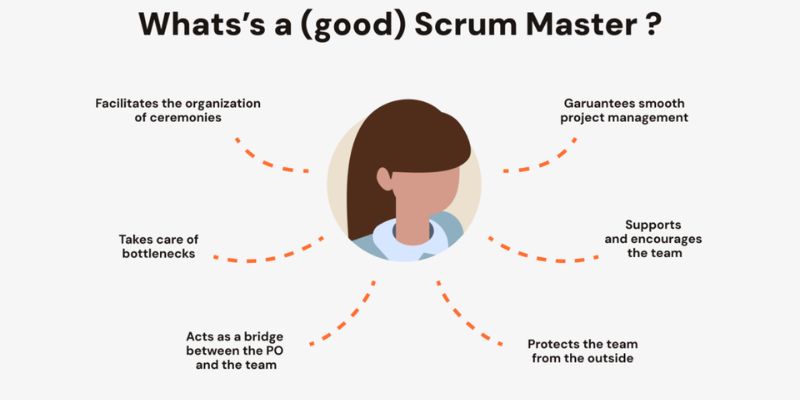
In today’s fast-paced workplace, success depends on flexibility, teamwork, and constant development. Many companies have embraced Agile approaches in order to satisfy these needs, and Scrum has become one of the most widely used frameworks for effectively managing projects and producing value. The Scrum Master, a specialist in charge of making sure that Agile principles are adhered to and that teams can efficiently work toward their objectives, is at the core of a successful Scrum team. The Scrum Master operates differently from typical project managers, despite the term seeming similar to a traditional management position.
Instead of giving orders to team members, they serve as coaches, facilitators, and servant leaders who assist groups in overcoming challenges and increasing productivity. You can learn through FITA Academy. The need for qualified Scrum Masters has grown dramatically as businesses continue to adopt Agile transformation. Professionals and companies may better appreciate the contribution a Scrum Master makes to team performance and project success by understanding what a Scrum Master performs in management.
Understanding the Scrum Master Role
A crucial part of a Scrum team, a Scrum Master makes sure that Agile and Scrum procedures are correctly used and upheld. The position was created as part of the Scrum methodology to assist teams in producing high-quality products through sprints, which are iterative development cycles. Scrum Masters concentrate on empowering teams to become highly productive and self-organizing, in contrast to traditional managers who assign tasks and track performance.
The Scrum Master serves as a mentor, assisting team members in comprehending Scrum events, roles, concepts, and artifacts. They make ensuring that sprint planning meetings, sprint reviews, retrospectives, and daily stand-ups are carried out effectively and provide significant results. Scrum Masters provide an atmosphere where teams can consistently enhance their procedures and output by encouraging openness, responsibility, and cooperation. Main goal is to assist the team in achieving success through Agile best practices.
Key Responsibilities of a Scrum Master
A Scrum Master’s duties go beyond just setting up meetings. Making sure the Scrum framework is appropriately applied at every step of project development is one of their main responsibilities. It is best to learn from Scrum Master Certification in Chennai. They assist team members stay focused on sprint objectives, promote teamwork, and lead Scrum ceremonies.
Coaching teams on Agile concepts and assisting them in embracing a continuous improvement mentality is another crucial duty. Scrum Masters keep an eye on team dynamics, spot inefficiencies in processes, and suggest ways to improve output. To guarantee that the product backlog is clearly defined and prioritized, they also collaborate closely with Product Owners.
Facilitating Communication and Collaboration
One of the most crucial elements of successful project management is effective communication, and Scrum Masters are essential in promoting it. Developers, designers, testers, business analysts, and stakeholders with various goals and viewpoints frequently make up agile teams. Inadequate coordination can lead to miscommunications and delays.
By promoting candid conversations and guaranteeing that every team member has a voice, a Scrum Master assists in closing communication gaps. They promote discussions on success, difficulties, and future tasks at daily stand-up meetings. Additionally, they set up sprint reviews so stakeholders may offer input and match project results with expectations.
Removing Obstacles and Improving Productivity
Finding and eliminating barriers that impede team effectiveness is one of a Scrum Master’s most important contributions. Technical problems, poor communication, a lack of resources, ambiguous needs, or organizational restrictions are a few examples of these constraints. The Scrum Master intervenes to assist solutions when team members face obstacles that impede progress. For instance, the Scrum Master collaborates with management to swiftly address a development team’s lack of access to tools or approvals. They assist the team in determining the underlying reasons and putting fixes in place if recurrent process bottlenecks are impeding production.
Scrum Masters enable teams to concentrate on producing high-quality work by eliminating distractions and cutting down on delays. It is good to learn from B School in Chennai for better understanding. Through sprint retrospectives, where teams evaluate achievements and pinpoint areas for growth, they also promote continual progress. This dedication to optimization guarantees that efficiency and production will keep rising over time.
Scrum Master vs. Project Manager vs. Product Owner
Making sure projects are finished on schedule and within budget is their main priority. In contrast, a product owner is in charge of optimizing the value of the product. They convey client needs to the development team, prioritize features, and oversee the product backlog.
Because they concentrate on the Scrum methodology and team effectiveness, the Scrum Master is different from both positions. They do not set priorities for products, manage personnel, or oversee budgets. Rather, they enforce adherence to Agile principles, remove barriers, and promote cooperation. Even though these positions frequently collaborate closely, recognizing their distinctions aids businesses in defining precise duties and enhancing project results.
Essential Skills and Qualities of an Effective Scrum Master
Because Scrum Masters must lead talks, settle disputes, and promote cooperation among many stakeholders, having strong communication skills is very crucial. Additionally, problem-solving skills are crucial. Scrum Masters regularly face problems that call for innovative and useful solutions. Although it is different from conventional command-and-control management, leadership is still a crucial attribute. Scrum Masters use assistance, mentoring, and influence instead of power to lead.
Empathy and emotional intelligence help them understand team dynamics and address concerns effectively. Adaptability is equally important because Agile environments often involve changing priorities and evolving requirements. Know about what is the difference between scrum master and agile coach. Knowledge of Agile methodologies, Scrum principles, and project management practices further strengthens their ability to guide teams successfully. These skills collectively enable Scrum Masters to create productive, motivated, and high-performing teams.
Benefits of Having a Scrum Master in an Organization
Organizations that employ skilled Scrum Masters often experience significant improvements in project delivery and team performance. One major benefit is increased productivity. By removing obstacles and improving workflows, Scrum Masters help teams complete tasks more efficiently. Another advantage is enhanced collaboration. This collaborative environment often results in higher-quality products and better customer satisfaction.
Increased flexibility also helps organizations. Businesses may stay competitive by using Scrum Masters to help teams react swiftly to shifting needs and market conditions. Furthermore, their emphasis on ongoing development fosters innovation and sustained operational excellence. Companies are realizing more and more how important Scrum Masters are to the success of their organizations as Agile adoption rises.
Common Challenges Scrum Masters Face
Scrum Masters play a crucial role, but they frequently face obstacles that might affect the efficiency of their teams. One of the most frequent challenges is opposition to Agile methods. Agile concepts may be difficult for team members or stakeholders used to traditional management techniques to adopt. Stakeholder expectations and team capabilities must be balanced, which presents another difficulty. While teams need reasonable deadlines to ensure quality, stakeholders may want quicker delivery. Scrum masters need to lead productive conversations that match business objectives with realistic implementation.
Resolving disputes inside a team can sometimes be difficult. Tension can arise from differences in priorities, communication methods, and viewpoints. Scrum Masters use active listening, mediation, and teamwork strategies to deal with these circumstances.
Career Opportunities and Growth for Scrum Masters
Industry-wide demand for certified Scrum Masters has increased due to the increasing use of Agile methodology. Professionals that can successfully manage Agile efforts are sought after by technology corporations, financial institutions, healthcare organizations, manufacturing enterprises, and consulting firms.
Before moving on to Scrum Master roles, entry-level workers may start out as Agile Team Facilitators or Scrum Coordinators. They can advance to such as Senior Scrum Master, Agile Coach, Release Train Engineer, or Agile Transformation Consultant with more experience. Eventually, some professionals advance into leadership roles that emphasize process improvement and organizational change.
Career opportunities might be further improved by earning certifications like Advanced Agile qualifications, Professional Scrum Master (PSM), or Certified ScrumMaster (CSM). These qualifications help workers stand out in a competitive job market and get access to higher-paying jobs when combined with real-world experience.
Tips for Aspiring Scrum Masters
Anyone interested in becoming a Scrum Master should start by learning everything there is to know about Agile concepts and Scrum practices. Attending courses, reading Scrum books, and taking part in Agile projects may all provide crucial foundational knowledge. Obtaining professional certification is another helpful step. Certifications demonstrate commitment to the field and attest to competence. Aspiring Scrum Masters should also focus on honing their leadership, communication, and conflict-resolution skills as these are essential for success.
Working in Agile teams and gaining real-world experience may greatly speed up learning. People may learn about real-world problems and best practices by watching seasoned Scrum Masters and taking part in Scrum ceremonies. Because Agile approaches are always evolving, continuous learning is still crucial. Aspiring Scrum Masters may create fulfilling careers in Agile management by fusing education, experience, and professional growth.