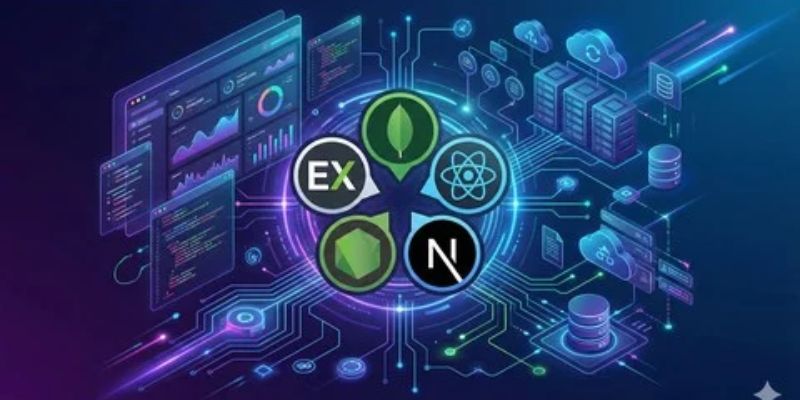
The gaming business has quickly transitioned from mobile apps and conventional consoles to dynamic browser-based experiences. These days, online technologies are strong enough to produce real-time, captivating games that function flawlessly on many devices. This is the application of the MERN stack, which consists of Express.js, React, Node.js, and MongoDB. It provides a full-stack JavaScript solution that makes development easier while enabling performance and scalability.
Because MERN enables smooth front-end and back-end interaction, quicker prototyping, and real-time interactivity, developers are increasingly using it for game development. The MERN stack offers the flexibility and capabilities required to create both basic multiplayer games and intricate interactive platforms. FITA Academy offers specialized MERN Stack training programs that help individuals and teams build strong full-stack development skills, develop dynamic web applications, and handle real-world project environments.
Understanding the MERN Stack in Game Development
Four potent technologies are combined in the MERN stack to produce cutting-edge web apps. The database is MongoDB, which holds game states, scores, and player information. The backend is managed via Express.js and Node.js, which also handle real-time communication, server logic, and APIs. The frontend is powered by React, which provides a responsive and interactive user experience. This stack is particularly helpful in game creation since it enables developers to utilize JavaScript to handle both the logic and the graphics.
For instance, Node.js handles real-time events like player movements, while React can generate dynamic game objects. This cohesive strategy speeds up development and lowers complexity. MERN is perfect for multiplayer games where several players engage at once because it also offers scalability. Before beginning development, it is crucial to comprehend how each component fits into the broader system.
Setting Up the Development Environment
Establishing a suitable development environment is a must for creating your game. Installing Node.js and npm will help you operate your server and manage dependencies. Next, configure MongoDB to store game-related data, either locally or via a cloud service. For effective coding, you should additionally install a code editor such as Visual Studio Code.
When the fundamentals are complete, use tools like Vite or Create React App to build a React application for quicker performance. MERN Stack Course in Chennai provides practical programs that help individuals develop full-stack development skills, create dynamic web applications, and manage real-world project workflows. To manage routing and APIs, start a Node.js project on the backend and install Express.js.
Install necessary packages like Socket as well.Real-time communication through IO is essential for multiplayer gaming. As your program expands, it will be easier to retain clarity if you organize your project structure early and separate the frontend and backend files. Smoother progress and fewer technical problems down the road are guaranteed in a well-prepared environment.
Designing and Developing a Simple Game
When developing a gaming application, begin with a basic idea like a memory game or tic tac toe. Start by using React to design the user interface. Make reusable parts for game components like as score displays, buttons, and boards. React’s state is crucial for tracking game progress, therefore pay attention to state management. Create APIs on the backend using Node.js and Express to manage game logic, including updating scores or verifying moves. Use WebSockets or HTTP requests to link the frontend and backend.
When a player moves, for instance, the frontend transmits information to the server, which interprets it and provides the updated game state. This methodical approach aids in your comprehension of the interactions between various components of the MERN stack. You may progressively add features and complexity without becoming overwhelmed if you start modest.
Implementing Game Logic and Real-Time Features
The foundation of any gaming application is game logic. Depending on the level of sophistication, logic can be implemented on both the frontend and the backend of a MERN-based game. React can manage logic for basic games, including victory conditions and score updates. Node.js becomes crucial for real-time or multiplayer gaming. using libraries such as Socket.IO, you may allow players to communicate with each other in real time. This makes it possible for all connected clients to instantaneously reflect actions like moves, chats, or changes. The MERN Stack Training Institute in Chennai focuses on practical, project-oriented preparation. To help learners gain expertise in full-stack development, build dynamic web applications, and manage real-world projects effectively.
When a player makes a move in a multiplayer game, for instance, the server instantly updates the other players. As a result, the experience is smooth and engaging. You can also add features like live notifications, leaderboards, and matchmaking. Inconsistencies are avoided and seamless gameplay is ensured by proper frontend and backend synchronization.
Optimizing Performance and Handling Challenges
In gaming apps, performance is crucial, particularly when handling animations and real-time interactions. The first step in optimizing your MERN application is to reduce needless re-renders in React by utilizing strategies like effective state management and memoization. Make sure your backend APIs are efficient and steer clear of complex calculations that could cause the server to lag. To swiftly obtain and change data, use MongoDB’s efficient database queries. Managing latency in real-time communication is another crucial component.
To increase responsiveness, use strategies like data compression and event throttling. Scalability constraints, server crashes, and synchronization problems are typical problems. Caching, load balancing, and appropriate error handling can help with these. Frequent testing and performance monitoring will enable you to find and address problems early on, guaranteeing consumers a seamless gaming experience.
Exploring Essential Tools and Libraries
Using the appropriate tools and libraries makes it easy to create gaming apps with MERN. Libraries like Phaser or Three.js help improve the visual appeal of frontend animations and images. Complex states in larger games can be managed with the aid of Redux or Zustand. Socket on the back end.While Mongoose streamlines database connections with MongoDB, IO is necessary for real-time functionality.
Additionally, you may manage user accounts and sessions using authentication libraries such as JWT. Frameworks for styling, such as Bootstrap or Tailwind CSS, can expedite UI development. Your application will function as intended thanks to testing tools like Jest and Cypress. These tools raise the caliber of your game while also increasing development efficiency. The complexity and requirements of your project will determine which library combination is best.
Integrating APIs and Managing Databases
APIs are essential to contemporary gaming applications. Express.js can be used to develop RESTful APIs in a MERN stack that manage front-end and back-end communication. User information, game progress, and external integrations can all be managed by these APIs. For features like social sharing, analytics, and leaderboards, for instance, you can use third-party APIs. All game-related data, including player profiles, scores, and accomplishments, is stored in MongoDB, which acts as the database.
You can effectively manage data and establish schemas with Mongoose. Scalability and performance depend on a well-designed database. For example, query time can be greatly increased by indexing frequently requested data. You can create scalable and reliable gaming apps by combining effective database administration with well-designed APIs.
Improving Workflow, Testing, and Deployment
Creating top-notch gaming applications requires a seamless development process. To keep track of changes and work together with other developers, use version control systems like Git. Divide your project into manageable chunks and use a methodical approach to development. These are some uses of MERN we should know. Testing is equally vital. Use tools like Jest to test your React components and build unit tests for your backend functionality. Tools like as Cypress can replicate actual user interactions for end-to-end testing.
When your application is ready, use platforms like AWS, Vercel, or Heroku to launch it. Make sure your database connections and environment variables are set up correctly. Pipelines for continuous integration and deployment (CI/CD) can automate deployment and testing. You may produce a dependable and scalable gaming application by keeping an organized workflow and concentrating on testing.
Final Report
Using the MERN stack to create gaming applications is gratifying and thrilling. It enables you to take advantage of JavaScript’s strength across the whole development process, from database management and backend functionality to frontend design. You may make interesting and scalable games by comprehending the essential elements of the stack, establishing an appropriate environment, and using an organized development methodology.
Your application will be much better if you use the appropriate tools, optimize performance, and incorporate real-time functionality. Even if obstacles could appear, you can overcome them with regular practice and problem-solving techniques. The MERN stack offers countless opportunities for game development, regardless of your level of experience. To hone your abilities and provide amazing gaming experiences, start simple, try out concepts, and progressively develop more complicated projects.